


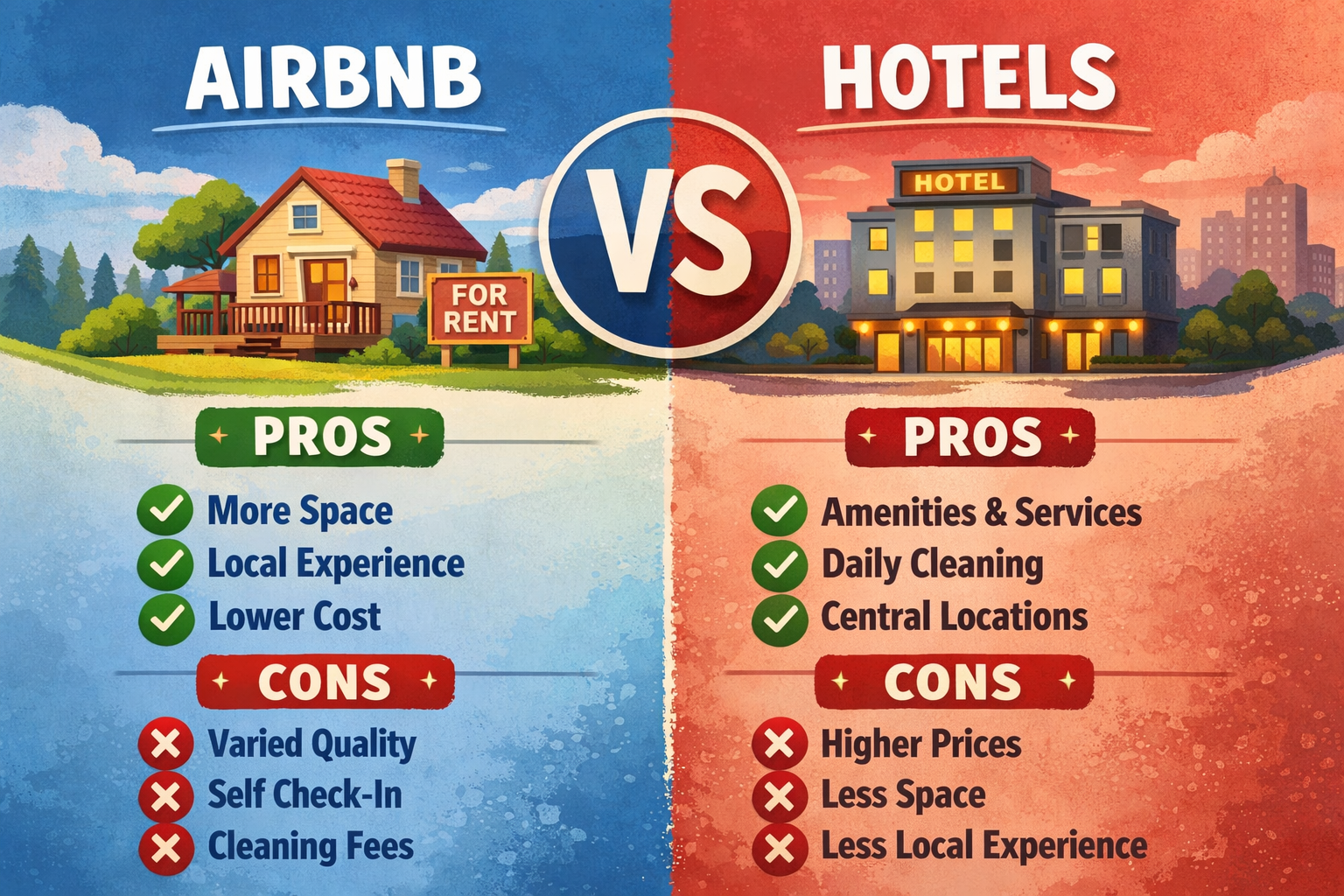
Airbnb vs Hotels — Pros and Cons
When planning a trip, one of the biggest decisions travelers face is where to stay. Should you book a hotel room with daily housekeeping and a front desk? Or should you choose a private home through Airbnb and enjoy a more local experience?
The debate between Airbnb and hotels has grown over the years. Some travelers prefer comfort and reliability. Others look for space, privacy, and affordability. In this article, we will break down the pros and cons of both Airbnb and hotels to help you decide what works best for your next trip.
What is Airbnb?
Airbnb is an online platform that allows people to rent out their homes, apartments, or rooms to travelers. Instead of staying in a traditional hotel, guests stay in properties owned by individuals. These properties can range from single rooms to entire villas.
Airbnb operates in thousands of cities worldwide and offers different types of stays, including short-term rentals and longer stays.
What Are Hotels?
Hotels are professionally managed accommodations that provide rooms and services to travelers. They range from budget options to luxury resorts. Well-known hotel brands like Marriott International and Hilton Worldwide operate globally and offer standardized services.
Hotels usually provide daily housekeeping, room service, front desk assistance, and amenities such as gyms, pools, and restaurants.
Pros of Staying in Airbnb
1. More Space and Privacy
One of the biggest advantages of Airbnb is space. Instead of a small hotel room, you may get an entire apartment or house. This is especially helpful for families or groups traveling together.
You can enjoy a living room, kitchen, private balcony, and sometimes even a backyard. Privacy is also better since you are not sharing hallways or common areas with dozens of other guests.
2. Cost-Effective for Groups
If you are traveling with friends or family, Airbnb can often be cheaper. Instead of booking multiple hotel rooms, you can rent one larger property and split the cost.
Long-term stays may also come with discounts, making Airbnb a good choice for extended vacations or remote work trips.
3. Access to Kitchen Facilities
Airbnb properties usually include a kitchen. This allows you to cook your own meals, save money on dining out, and eat healthier if needed.
For travelers with dietary restrictions, this is a big advantage.
4. Local Experience
Staying in a residential neighborhood can give you a more authentic experience. You may discover local cafes, small shops, and hidden gems that tourists often miss.
Some hosts also provide personal recommendations about the area.
5. Unique Properties
Airbnb offers unique stays that hotels cannot always match. You can stay in treehouses, cabins, farmhouses, or even historical homes. For travelers looking for something special, this adds excitement to the trip.
Cons of Staying in Airbnb
1. Inconsistent Quality
Unlike hotels, Airbnb properties are individually owned. This means quality can vary. Photos may look great online, but the reality may not always match expectations.
Although reviews help, there is still some risk.
2. Cleaning Fees and Extra Charges
Airbnb listings often include cleaning fees, service fees, and sometimes additional charges. In some cases, the final price may be higher than expected.
Hotels usually include these costs in the room rate.
3. Limited Services
Most Airbnb stays do not include daily housekeeping, room service, or a 24-hour front desk. If you need help late at night, it may be harder to contact the host.
4. Check-In Complications
Hotel check-in is usually simple and available 24/7. With Airbnb, check-in instructions can vary. Some require key pick-ups, lockboxes, or meeting the host in person.
If travel plans change or flights are delayed, this can create stress.
5. Legal and Regulation Issues
In some cities, short-term rentals face restrictions. Local laws may impact availability or reliability of bookings.
Pros of Staying in Hotels
1. Professional Service
Hotels are professionally managed. Staff members are trained to handle guest needs. From concierge services to room cleaning, everything is organized and structured.
This provides peace of mind, especially for business travelers.
2. Consistent Standards
When you book with a well-known brand, you know what to expect. Whether it is a hotel in New York or Dubai, the experience is usually similar in terms of cleanliness and service quality.
Consistency is one of the biggest advantages of hotels.
3. Amenities and Facilities
Hotels often offer extra amenities such as:
Swimming pools
Fitness centers
Restaurants and bars
Spa services
Conference rooms
These facilities can enhance your stay, especially for longer trips.
4. Security
Hotels typically have security staff, surveillance cameras, and secure access systems. This can make guests feel safer.
Front desk staff are also available 24/7.
5. Flexible Check-In and Support
Late arrival? Early departure? Hotels are better prepared for last-minute changes. Most operate around the clock and can assist quickly.
Cons of Staying in Hotels
1. Less Space
Hotel rooms are often smaller compared to Airbnb apartments or houses. Families may feel cramped in a single room.
2. Higher Costs for Larger Groups
If multiple rooms are required, hotel costs can increase quickly. This makes them less budget-friendly for large groups.
3. Less Personal Experience
Hotels can sometimes feel impersonal. You may interact mostly with staff rather than locals. The experience may feel more commercial than authentic.
4. Limited Cooking Options
Most hotel rooms do not include full kitchens. Dining out for every meal can become expensive.
Airbnb vs Hotels: Which One Is Better?
The answer depends on your travel style.
Choose Airbnb If:
You are traveling with family or a group
You want more space and privacy
You plan to cook meals
You prefer local neighborhoods
Choose Hotels If:
You value professional service
You want daily cleaning
You prefer consistent quality
You are traveling for business
Both options have strengths and weaknesses. Your priorities will determine the best choice.
Key Factors to Consider Before Booking
Budget
Always compare the total price, including taxes and fees. Sometimes a hotel deal may be cheaper than an Airbnb after all charges.
Location
Hotels are often located in city centers or tourist areas. Airbnb properties may be in residential neighborhoods. Choose based on convenience.
Length of Stay
For short stays, hotels may be easier. For longer stays, Airbnb may provide better value.
Safety and Reviews
Read reviews carefully. Whether booking a hotel or Airbnb, guest feedback provides useful insight.
FAQs
Is Airbnb cheaper than hotels?
It depends on the location and length of stay. Airbnb can be cheaper for groups or long-term stays, but extra fees may increase costs.
Are hotels safer than Airbnb?
Hotels usually offer professional security systems and 24-hour staff. Airbnb safety depends on the property and host.
Which is better for families?
Airbnb is often better for families because of larger space and kitchen access. However, family-friendly hotels can also be a great option.
Do Airbnb hosts provide daily cleaning?
Most Airbnb hosts do not provide daily housekeeping unless specifically mentioned.
Can I cancel easily?
Hotels often offer flexible cancellation policies. Airbnb cancellation depends on the host’s specific policy.
Choosing between Airbnb and hotels is not about which one is universally better. It is about what fits your travel needs.
If you want comfort, professional service, and reliability, hotels may be the right choice. If you prefer space, flexibility, and a local experience, Airbnb can be a great option.
Before booking, compare prices, read reviews carefully, and consider your travel goals. The right accommodation can make a big difference in your overall travel experience.
No matter what you choose, the most important thing is to enjoy your journey and create lasting memories.