


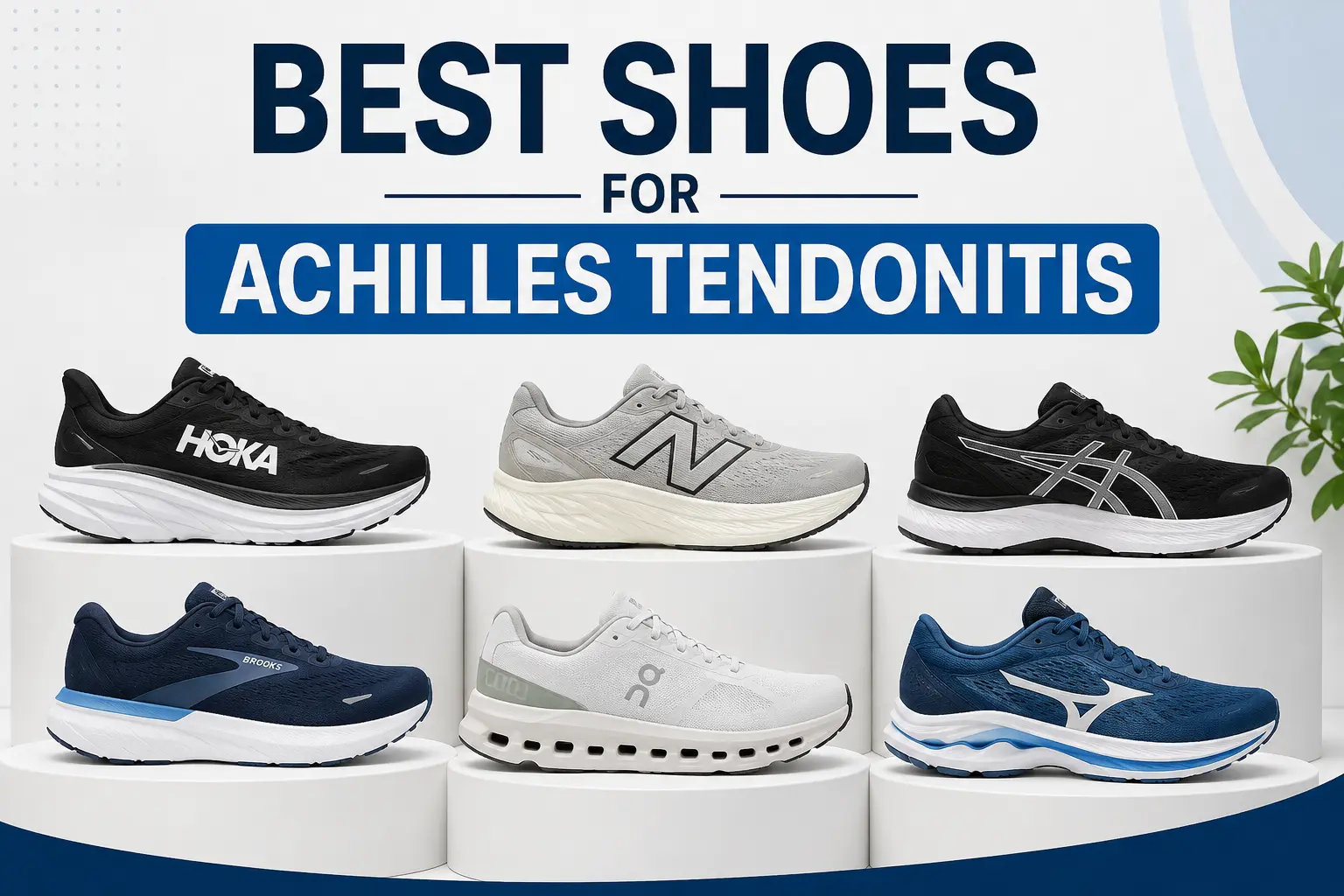
Best Shoes For Achilles Tendonitis in 2026
If your heel hurts after walking, running, or even just standing up in the morning, there is a good chance your Achilles tendon is the problem. Achilles tendonitis is a prevalent pain problem that many face, and an unsuitable pair of shoes can significantly aggravate it. The positive aspect is that choosing the correct footwear truly makes a difference. This manual explains everything in clear, easy language so you can choose correctly without becoming puzzled.
What Is Achilles Tendonitis and Why Do Shoes Matter So Much?
The Achilles tendon is a strong band that links your calf muscles to your heel bone. When this tendon is overworked or put under stress, it becomes inflamed and sore. This discomfort is referred to as Achilles tendonitis. It typically manifests as a burning sensation or tightness around the back of your heel, particularly in the morning or after prolonged periods of sitting.
Your footwear is the initial thing that makes contact with the ground whenever you take a step. If your shoes lack cushioning, are overly stiff, or are too flat, each step applies pressure straight onto that tender tendon. The correct footwear alleviates that strain, properly supports your foot, and allows the tendon to recover. This is why selecting the optimal shoes for Achilles tendonitis is one of the wisest choices you can make.
What to Look for in the Best Shoes for Achilles Tendonitis:
Prior to discussing particular shoe types, here are the essential features that every quality Achilles shoe must possess:
• Heel drop of no less than 8 to 12mm; A greater heel drop indicates that your heel is positioned higher than your toes. This relieves strain on the Achilles tendon since it doesn't need to extend as much.
• Effective padding in the heel ; Gentle cushioning absorbs impacts, preventing the tendon from taking a hard hit with each step.
• Sturdy heel counter: The rear section of the shoe must secure your heel tightly without any movement.
• Rocker sole or curve bottom: This style of sole allows your foot to roll forward more naturally, resulting in reduced strain on the tendon.
• Spacious toe area; Allows your toes to expand, promoting a more natural foot landing.
• Arch support: Flat feet or collapsed arches can strain the Achilles tendon, making adequate arch support essential.
Best Running Shoes for Achilles Tendonitis in 2026:
Athletes are among the most frequently affected groups by Achilles tendonitis. While running, your Achilles tendon endures considerable repeated strain. An unsuitable running shoe can significantly exacerbate the issue. Here are the best choices for runners facing this problem:
1) HOKA Clifton 9:
The HOKA Clifton 9 stands out as a highly favored option for individuals experiencing Achilles issues. It features a plush, dense midsole that absorbs a significant amount of impact. The rocker bottom enables your foot to glide forward effortlessly without putting pressure on the back of your heel. It is airy and cozy for extended runs.
2) Brooks Ghost 16:
Brooks Ghost 16 is an excellent versatile running shoe. It features a 12mm heel drop, ideal for relieving stress on your Achilles. The padding is gentle yet provides sufficient support for a feeling of stability. Numerous runners experiencing heel and tendon problems highly recommend this shoe.
3) New Balance Fresh Foam 1080v14:
The Fresh Foam 1080v14 provides a soft, cushiony sensation beneath your feet. It envelops your heel in gentle foam and secures it firmly. The heel drop is approximately 8mm, which alleviates tension on the tendon while not feeling excessively elevated. Ideal for extended runs or relaxed training sessions.
Best Walking Shoes for Achilles Tendonitis in 2026:
Not everybody runs. Numerous individuals develop Achilles tendonitis simply from walking daily, standing at their jobs, or performing light tasks. Here are the top walking shoes for Achilles tendonitis:
1) Asics Gel-Kayano 31:
This footwear offers outstanding stability and substantial heel padding. The gel in the heel effectively absorbs shock, which greatly aids when walking on hard surfaces all day. It additionally provides excellent arch support, which relieves indirect pressure from the Achilles.
2) Skechers Go Walk 7:
For a lighter and more relaxed choice, the Skechers Go Walk 7 is a great pick. It is remarkably soft, easy to wear, and features a heel that is slightly elevated compared to the front. It manages Achilles pain effectively during regular walking and light activities.
3) New Balance 990 version 6:
Designed for durability and enduring comfort, the 990v6 provides robust support for your heel
Best Tennis Shoes for Achilles Tendonitis in 2026:
Tennis is a sport with a lot of quick side-to-side moves, sudden stops, and explosive starts. All of that puts a huge amount of stress on the Achilles tendon. The best tennis shoes for Achilles tendonitis need to be stable, cushioned, and offer solid heel support.
1. Asics Gel-Resolution 9:
The Gel-Resolution 9 is one of the top-rated tennis shoes on the market. It has gel cushioning in the heel and a very supportive structure. When you make those quick lateral moves, your heel stays locked in and protected. This shoe is built for players who play often and need serious support.
2. Nike Air Zoom Vapor 11:
Nike Vapor 11 uses zoom air cushioning to give you a responsive, bouncy feel. It absorbs a lot of shock so your Achilles does not have to. The sole is wide and stable, which is exactly what you need when you are moving fast on a tennis court.
Best Athletic Shoes for Achilles Tendonitis in 2026:
Perhaps you aren’t fond of running or tennis, but you still enjoy working out, hitting the gym, or engaging in general exercise. These sports shoes are perfect for many different activities:
1) On Cloud X 3:
On Running has created outstanding footwear for individuals suffering from foot and tendon discomfort. The Cloud X 3 features gentle pods on the base that absorb impact with each step and a slightly elevated heel that prevents the Achilles from excessive stretching. It appears sleek and contemporary as well, making it suitable for wearing inside or outside the gym.
2) Adidas Ultraboost 24:
Adidas Ultraboost is renowned for its Boost foam innovation. This foam compresses under your weight and then rebounds, providing energy return. For individuals with Achilles tendonitis, this translates to reduced harsh impact and increased soft cushioning.
Best Shoe Inserts for Achilles Tendonitis in 2026:
Sometimes even a great shoe needs a little extra help. That is where shoe inserts (also called orthotics or insoles) come in. The best shoe inserts for Achilles tendonitis focus on two things: lifting the heel and supporting the arch.
1) Superfeet GREEN Footbeds:
Superfeet GREEN is among the most recognized insoles available. It provides a supportive heel cup that holds your foot and prevents it from rolling inward. The firm arch support distributes pressure more uniformly, preventing excessive strain on your Achilles.
2) Spenco Maximum Total Support:
These insoles provide ample cushioning for the entire foot, rather than only the arch. The heel cushioning is particularly soft and provides shock absorption. If you spend all day standing, these significantly improve comfort in no time.
3) Heel Elevation Inserts:
Occasionally, the easiest fix is a minor heel lift. These are slim wedges placed beneath your heel within any footwear. They elevate the heel slightly and instantly lessen the tension on the Achilles tendon. They are often available inexpensively at many pharmacies and serve effectively as a short-term solution or in conjunction with other therapies.
Best Shoes to Wear for Achilles Tendonitis Day to Day in 2026:
Your running shoes or gym shoes might be great, but what about when you are just at home or going out casually?
Here are some great everyday options
• Birkenstock Arizona featuring a soft footbed; The traditional Birkenstock sandal truly provides outstanding arch support. The soft footbed variant provides additional padding for individuals experiencing foot discomfort.
• Vionic Tide II Sandals; Vionic produces sandals featuring integrated orthotic support. Designed by podiatrists, they are highly effective for individuals with heel and tendon problems.
• Dansko Professional Clogs; Favored by nurses and individuals who are on their feet all day, these clogs feature a rocker sole and elevated heel that numerous Achilles patients consider quite comfortable.
• New Balance 990v6 (casual use); Functions equally well as an everyday shoe and for walking. You can wear it casually for errands, shopping, or any relaxed situations.
Shoes to Completely Avoid if You Have Achilles Tendonitis:
Knowing what not to wear is just as important. Stay away from these types of footwear if you want your tendon to heal:
• Flat sandals or flip flops: No cushioning and lack of heel support. These allow the tendon to extend completely with each step.
• Minimalist or barefoot footwear: These are intended to replicate the experience of walking without shoes, featuring minimal cushioning and a low heel drop. Not suitable for Achilles discomfort.
• High heels: Although a minor heel elevation is beneficial, excessively high heels push your foot into an unnatural stance and may aggravate the issue over time.
• Aged or damaged sneakers: When the padding deteriorates in a shoe, it no longer safeguards your tendon effectively. Change shoes frequently.
• Totally stiff shoes that lack flexibility: Your foot requires some natural motion. A shoe that is excessively rigid can generate pressure points.
Tips to Manage Achilles Tendonitis Along With the Right Shoes:
Good shoes are a huge part of recovery, but they work best when combined with other simple habits:
• Gently stretch your calf muscles each morning before getting out of bed. Tight calves exert direct tension on the Achilles tendon.
• Avoid resuming intense workouts too soon. Allow the tendon to rest and heal before exerting yourself.
• Use ice on the affected area for 15 to 20 minutes following activity to reduce swelling.
• Steer clear of walking on uncarpeted floors without footwear, particularly in the morning when the tendons are the stiffest.
• Consult a physiotherapist if the discomfort has lasted longer than a few weeks. Eccentric heel drops are highly effective for this issue.
• Alternate between two pairs of quality shoes to allow each pair to recover before wearing them again.
Final Thoughts: Getting the Right Shoe Makes a Real Difference
Achilles tendonitis may seem like it dominates your existence. Each step is painful, and it seems you can't find a pause. However, a suitable pair of shoes can significantly alleviate much of that discomfort in no time. The important points to keep in mind are: seek a greater heel drop, adequate cushioning in the heel, a sturdy heel counter, and robust arch support.
If you’re looking for the top running shoes for Achilles tendonitis, the finest walking shoes for Achilles tendonitis, or simply something cozy for home use, excellent choices are available for you in 2026. Insert the appropriate shoe inserts if necessary, and you’ll be surprised at how much more comfortable your feet are.
Spend time seeking the perfect match. Your Achilles tendon performs a significant amount of work every single day. Provide it the backing it merits.
Frequently Asked Questions (FAQs):
Q1: What heel drop is ideal for Achilles tendonitis?
A heel drop between 8 mm and 12 mm is typically advised for individuals suffering from Achilles tendonitis. This indicates that the heel is clearly elevated compared to the toes, which lessens the strain on the Achilles tendon with each step. Shoes with a zero drop or very low drop (such as minimalist footwear) ought to be avoided as they fully stretch the tendon.
Q2: Can improper footwear lead to Achilles tendonitis?
Certainly, without a doubt. Wearing flat shoes, old sneakers, or unsupported flip-flops gradually increases stress on the Achilles tendon. This ongoing stress may result in inflammation and discomfort. One of the initial suggestions a doctor or physiotherapist will make when you mention this type of heel pain is to switch to better, more supportive footwear.
Q3: Is it advisable to wear shoe inserts in addition to supportive footwear for Achilles tendonitis?
It relies on the shape of your foot. For individuals with flat feet or low arches, incorporating an orthotic insert into your shoe can offer additional support that the shoe by itself may lack. A heel lift insert can additionally assist by elevating your heel slightly further, which directly diminishes strain on the tendon. Numerous individuals discover that combining a quality shoe with an appropriate insole yields optimal outcomes.
Q4: What is the healing time for Achilles tendonitis when using proper footwear?
Each person has unique characteristics, but with suitable footwear, adequate rest, and fundamental care, numerous individuals begin to feel significantly improved in 4 to 8 weeks. Mild cases may get better in only 2 to 3 weeks. Acute or chronic conditions might require 3 to 6 months for complete recovery. The key aspect is to avoid persevering through intense pain. Take a break when necessary and allow the tendon.
Q5: Is it possible to continue running with Achilles tendonitis if I have the appropriate footwear?
In certain mild instances, yes. If the discomfort is minimal and occurs post-run instead of during, you might still be able to run with appropriate shoes and a lowered distance. If you experience pain while running or feel sharp and intense discomfort, you should halt and take a break. Consistently pay attention to your body. Numerous physiotherapists recommend transitioning to low-impact exercises such as swimming or cycling during the healing of the tendon, followed by a gradual return to running once the discomfort subsides.