
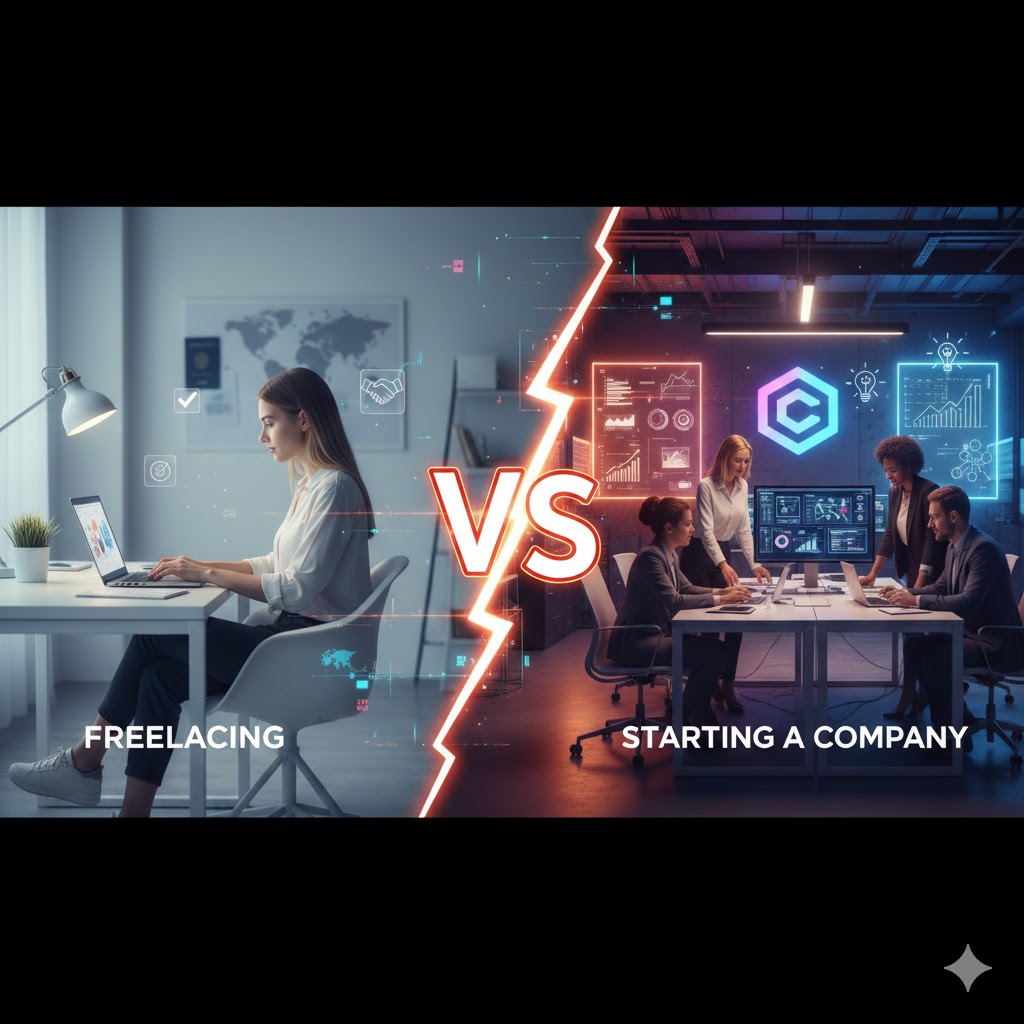
Freelancing vs Starting a Company — Which Is Better?
In today’s world, making a living has more options than ever before. With the rise of the internet, technology, and global markets, people are exploring different ways to earn income. Two popular paths are freelancing and starting a company. But which one is better? The answer depends on your goals, skills, and lifestyle. In this article, we’ll break down both options, their pros and cons, and help you make an informed decision.
What Is Freelancing?
Freelancing is working independently for clients without being tied to a single employer. Freelancers offer services like writing, designing, programming, marketing, consulting, and more. Platforms like Upwork, Fiverr, and Freelancer have made it easier to find clients worldwide.
Advantages of Freelancing
Flexibility: You can choose your work hours and work from anywhere. This is ideal for people who value freedom and want to balance work with personal life.
Low Startup Cost: Starting as a freelancer usually requires minimal investment. A computer, internet connection, and some skills are enough to get started.
Control Over Workload: You can choose the projects you want to work on and decline tasks that don’t interest you.
Variety: Freelancers often work with different clients and industries, giving them exposure to diverse experiences.
Disadvantages of Freelancing
Income Instability: Freelancers may face inconsistent income, especially when starting. Projects might be seasonal or irregular.
No Employee Benefits: Freelancers handle their own taxes, health insurance, and retirement plans.
Self-Discipline Required: Without a boss, it’s easy to procrastinate or overwork.
Limited Growth: Freelancers rely mostly on their skills. Scaling income usually requires increasing rates, working longer hours, or hiring subcontractors.
What Is Starting a Company?
Starting a company means building a business entity to provide products or services. It can range from a small local shop to a tech startup serving global clients. Entrepreneurs handle everything from product development to marketing, sales, and operations.
Advantages of Starting a Company
Scalability: A company can grow beyond one person. Hiring employees or automating tasks allows you to earn more without working all the hours yourself.
Brand and Reputation: A company builds a brand, which can create trust and attract bigger clients.
Long-Term Value: Companies have assets, intellectual property, and goodwill that increase value over time. You can sell the business or pass it to future generations.
Diverse Opportunities: Running a business allows you to explore different revenue streams, partnerships, and markets.
Disadvantages of Starting a Company
High Risk: Starting a company involves investment, uncertainty, and potential losses. Not all businesses succeed.
Time-Consuming: Entrepreneurs often work long hours, especially in the early stages.
Responsibility: You’re responsible for employees, taxes, regulations, and overall business success.
Slow Initial Growth: It may take months or years before the business becomes profitable.
Key Differences Between Freelancing and Starting a Company
|
Understanding these differences can help you choose the right path based on your personal and financial goals.
Who Should Choose Freelancing?
Freelancing is ideal for people who:
Want flexible schedules and location independence
Prefer working independently without managing a team
Are starting their career or testing their skills
Have in-demand skills that clients need immediately
Freelancing can also serve as a stepping stone to starting a company. Many successful business owners first built a freelancing career to gain experience, build a client base, and generate capital.
Who Should Consider Starting a Company?
Starting a company is best for people who:
Want long-term growth and wealth creation
Enjoy leadership and managing teams
Have a business idea with market demand
Are willing to take risks for higher rewards
Entrepreneurs should be ready to face challenges, learn continuously, and stay patient. Building a company is a marathon, not a sprint.
Freelancing vs Starting a Company: Which Is Better?
There is no one-size-fits-all answer. Here are some scenarios to consider:
If you value freedom over money: Freelancing may be better.
If you want to scale and create a brand: Starting a company is ideal.
If you are risk-averse: Freelancing is safer.
If you want to build assets and long-term wealth: A company offers more opportunities.
Some people even choose a hybrid approach: starting as a freelancer while gradually building a small company. This way, you can test the market, gain clients, and reduce risk.
Tips for Succeeding in Either Path
Develop Skills: High-quality work leads to more clients or customers. Invest in learning and improving your skills.
Build a Portfolio or Brand: Showcase your work as a freelancer or your company’s products/services to gain trust.
Network: Connections can lead to opportunities, partnerships, and referrals.
Manage Finances: Track income, expenses, and taxes carefully. Financial discipline is crucial for both freelancers and entrepreneurs.
Stay Consistent: Success in both freelancing and business requires persistence and patience.
FAQs About Freelancing vs Starting a Company
Q1: Can freelancing turn into a company?
Yes. Many successful businesses started as freelancing ventures. Once you have a steady client base, you can hire employees, automate processes, and register a formal business.
Q2: Which has better income potential?
In the short term, freelancing can provide immediate income. However, starting a company has higher long-term income potential due to scalability.
Q3: Is freelancing safer than starting a company?
Generally, yes. Freelancers face lower financial risks since they don’t invest heavily upfront. Companies have higher risks but also higher rewards.
Q4: Do I need special skills to start a company?
While technical skills help, leadership, management, and problem-solving skills are equally important. You can hire or partner with others to fill gaps.
Q5: Can I do both at the same time?
Absolutely. Many freelancers gradually transition into business owners. This approach reduces risk and ensures a steady income during the early stages.
Conclusion
Choosing between freelancing and starting a company depends on your goals, risk tolerance, and lifestyle preferences. Freelancing offers freedom, flexibility, and low risk, while starting a company provides long-term growth, scalability, and brand value.
There is no wrong choice — the key is understanding your priorities and planning accordingly. Many people start with freelancing to gain experience, then scale into a company when they are ready. The best path is the one that aligns with your skills, passion, and vision for the future.