

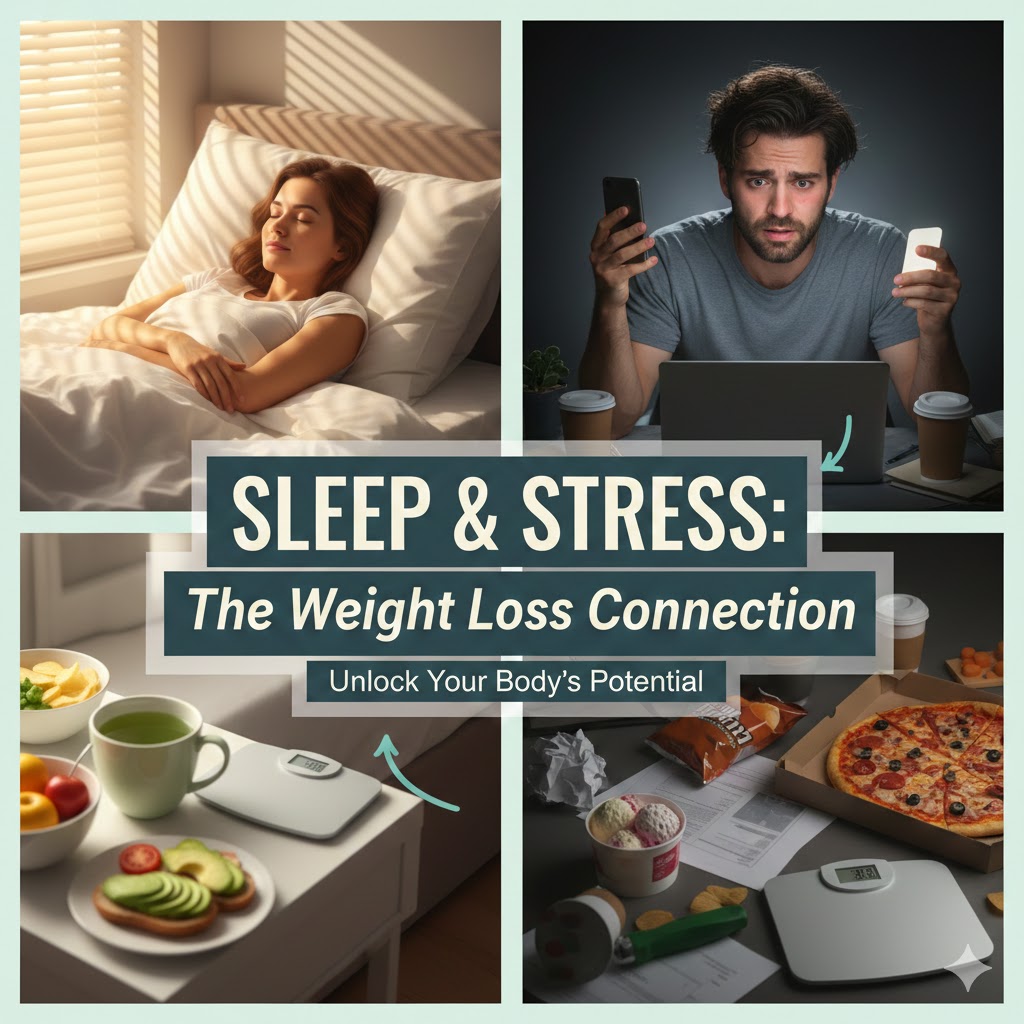
How Sleep and Stress Affect Your Weight Loss
Weight loss is not just about eating fewer calories or working out more. Many people focus solely on diet and exercise while ignoring two crucial factors: sleep and stress. These hidden influences can make or break your weight loss journey. In this article, we will explore how sleep and stress affect your body and why managing them is key to achieving your goals.
The Connection Between Sleep and Weight Loss
Sleep is often overlooked in weight management, but research shows it plays a critical role. Not getting enough sleep can slow your metabolism, increase hunger, and reduce your motivation to exercise.
How Lack of Sleep Increases Hunger
When you sleep poorly, your body produces more ghrelin, the hormone that signals hunger, and less leptin, the hormone that signals fullness. This imbalance can lead to overeating, especially cravings for sugary or high-calorie foods.
Sleep and Metabolism
Sleep deprivation can also affect your metabolism. Your body becomes less efficient at processing glucose, which can lead to increased fat storage. Over time, this can make weight loss much harder, even if you are eating healthy and exercising regularly.
Tips for Better Sleep
Stick to a schedule: Go to bed and wake up at the same time every day.
Limit screen time: Avoid phones, laptops, and TVs at least an hour before bed.
Create a calm environment: Keep your bedroom dark, quiet, and cool.
Avoid caffeine late in the day: Caffeine can stay in your system for hours and disrupt sleep.
How Stress Impacts Weight Loss
Stress is another major factor that can prevent weight loss. When you’re stressed, your body releases cortisol, the stress hormone. High cortisol levels can lead to increased appetite, fat storage, and cravings for unhealthy foods.
Emotional Eating
Many people respond to stress by eating comfort foods, which are often high in sugar and fat. This can create a cycle where stress leads to overeating, which leads to guilt and more stress.
Stress and Fat Storage
Cortisol doesn’t just increase appetite; it also encourages your body to store fat, especially around the abdomen. This is why people under chronic stress may notice stubborn belly fat, even if they are dieting and exercising.
Tips to Manage Stress
Exercise regularly: Physical activity reduces cortisol and improves mood.
Practice mindfulness: Meditation, deep breathing, and yoga can help lower stress levels.
Take breaks: Small breaks during work or daily routines help refresh your mind.
Connect with others: Spending time with friends or family reduces stress naturally.
The Combined Effect of Sleep and Stress on Weight
Sleep and stress are closely linked. Poor sleep increases stress, and high stress makes it harder to sleep. Together, they can make losing weight feel almost impossible.
Hormonal Imbalance
When sleep is insufficient and stress is high, your hormones are in constant imbalance. Hunger hormones spike, fat-storing hormones rise, and energy levels drop. This hormonal chaos not only increases cravings but also reduces your motivation to exercise.
Reduced Energy and Motivation
Without proper sleep and with elevated stress, even simple activities feel exhausting. You may skip workouts, eat more processed foods, or make unhealthy choices just to cope with fatigue.
Breaking the Cycle
The key to breaking this cycle is addressing both sleep and stress simultaneously. Prioritize rest, practice stress management techniques, and create a routine that supports your weight loss efforts.
Lifestyle Changes for Better Sleep and Lower Stress
Improving sleep and reducing stress doesn’t require drastic changes. Small, consistent habits can make a big difference.
Nutrition Tips
Eat a balanced diet with plenty of protein and fiber.
Avoid excessive sugar and processed foods that spike blood sugar and affect mood.
Include foods that promote sleep, like almonds, bananas, and herbal teas.
Exercise Tips
Aim for at least 30 minutes of moderate exercise most days.
Include both cardio and strength training for overall health.
Avoid intense workouts right before bedtime.
Mental Health Tips
Journal your thoughts to release mental tension.
Set realistic goals and celebrate small achievements.
Limit exposure to news or social media that may cause stress.
Weight loss is not just about what you eat or how much you exercise. Sleep and stress are equally important factors that influence your hormones, metabolism, and energy levels. By prioritizing good sleep, managing stress, and maintaining healthy habits, you can improve your chances of reaching your weight loss goals more effectively. Remember, small changes in lifestyle can lead to significant long-term results.
FAQs About Sleep, Stress, and Weight Loss
Q1: How many hours of sleep do I need for weight loss?
A1: Most adults need 7–9 hours of quality sleep each night. Consistency is just as important as duration.
Q2: Can stress alone cause weight gain?
A2: Yes, chronic stress increases cortisol levels, which can trigger fat storage and cravings for unhealthy foods.
Q3: Does poor sleep make me hungrier?
A3: Yes, poor sleep increases ghrelin (hunger hormone) and decreases leptin (fullness hormone), leading to increased appetite.
Q4: What are simple ways to reduce stress for weight loss?
A4: Exercise, meditation, deep breathing, journaling, and connecting with loved ones are effective ways to reduce stress.
Q5: Can improving sleep and stress management replace dieting?
A5: Not entirely. Sleep and stress management enhance weight loss efforts but work best when combined with a healthy diet and regular exercise.