

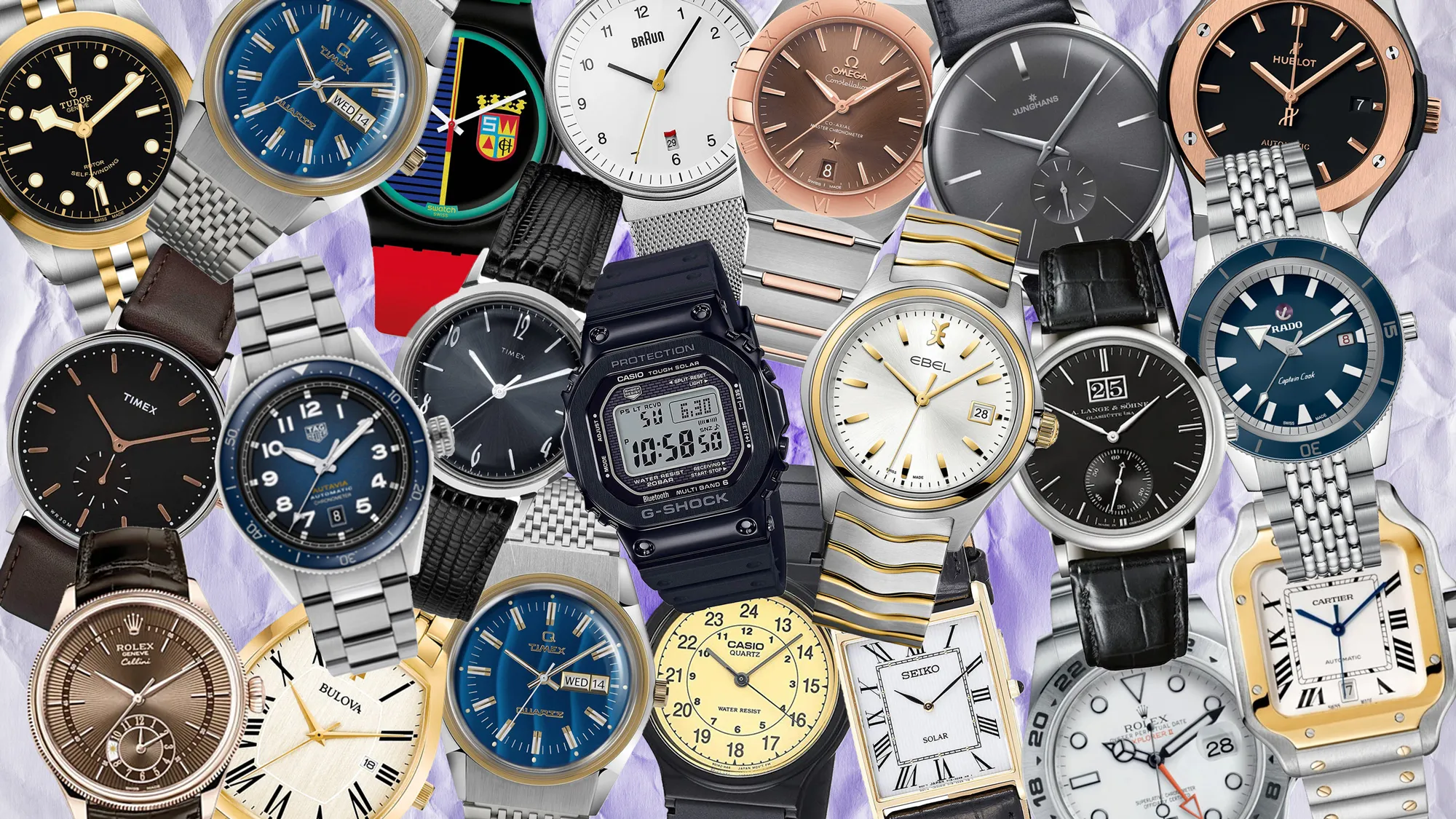
Watches have significantly evolved from a basic time-telling device. What began as a simple necessity of function to tell time has become a personal aspect of style, fitness track, symbol of luxury, and, in some cases, a digital assistant. Watches history is an engaging development that includes technological advancement, history, and fashion.
1. The Origins: Timekeeping Before Watches
Before wristwatches became common, humans measured time through sundials and water clocks until eventually pocket watches were made available. In the 16th century, mechanical watches were utilized in the pocket form. They had become utilized primarily by wealthy persons in Europe for their status and prestige as well as a practical means of measuring time. Pocket watches were bulky and often inaccurate, but they were the first step of a revolution to change the way we keep time.
2. The Rise of the Wristwatch
Initially thought to be feminine fashion accessories, it wasn't until World War I that men began to embrace wristwatches. The military found that soldiers in the trenches had difficulty operating pocket watches and began to use wristwatches for convenience and efficiency.
By the 1920s wristwatches were truly the global phenomenon we know them to be today. The iconic brands of Rolex and Omega began innovating their watches for capabilities such as water resistance, automatic winding, and a luxury aesthetic from precision.
3. The Quartz Revolution
The quartz technology came to watchmaking in the 1970s, changing how watches were marketed forever. Companies like Seiko began to produce affordable, battery-powered watches with quartz technology that were far more accurate than the mechanical watches of that time.
Many companies were started and thrived under the quartz movement. It was the Quartz Crisis, because many of the traditional Swiss brands did not adapt to the quartz world, and many of them, once considered legend brands, faded away as companies. The Quartz Crisis did have a positive effect, however, because it opened the doors to a much larger watch market, and became more affordable for more people to wear timepieces.
4. Digital and Smart Watches Enter the Scene
Digital watches came to symbolize a culture in the 1980s and 1990s. Brands like Casio were able to offer watches that included all sorts of digital accessories: calculators, games, alarms - any conception of what was possible in a watch was challenged.
Fast forward to the twenty-first century and smartwatches have challenged watches' very definition. Devices such as the Apple Watch and Samsung Galaxy Watch, or even fitness watches such as Fitbits can take your heart rate, receive phone call notifications, track your steps, and even monitor your sleeping cycles. Watches today are more integrated with one's health and weekly routine than ever.
5. Watches as Style Statements
While function still matters, style has taken center stage.A watch usually shows someone who you are before you even speak.
For example, luxury watches from TAG Heuer, Audemars Piguet and Patek Philippe serve as status symbols. Minimalists brands such as Daniel Wellington and MVMT offer value-driven elegant minimalism to be sure, but cater as well to millennial professionals.
Vintage styles are also gaining traction and some brands have even gone back into the archives while ensuring there is plenty of nostalgia for consumers.
6. Sustainability and the Future of Watches
As consumers become increasingly eco-friendly, the watch industry is also undergoing a sustainability transformation. Solar-powered watch technology, recyclable materials, and sustainable manufacturing methods are becoming standard operating procedure.
Smartwatches are evolving to adopt sustainability designs and using sustainable parts, such as battery technology that lasts longer. The future may even include AI watches, watches that charge through motion or sends a voice prompt and subscribes to your demands.
7. Why Watches Still Matter in a Smartphone Era
Although smartphones now provide the time with only a glance, watches are not extinct; they're alive and flourishing. Watches provide a practical, stylish, and creative way to fulfill many of our daily requirements with hands-free capabilities. And perhaps even more importantly, watches showcase taste and lifestyle choices in ways that a smartphone's faceless design, never could.
Watches are no longer just about the "now" or time; they exist beyond time.
Final Thoughts
The story of the watch provides a narrative about our journey through time as people; the history of the watch highlights the advances in craftsmanship, technology, and our personally appropriated identities. Whether you love the complication of an automatic watch, or simply admire the cool features of a smartwatch, when you put on a watch you are recalling centuries of history—and of our current identity.
So when you put on your watch, remember: it is more than just a tool, it is a history.