

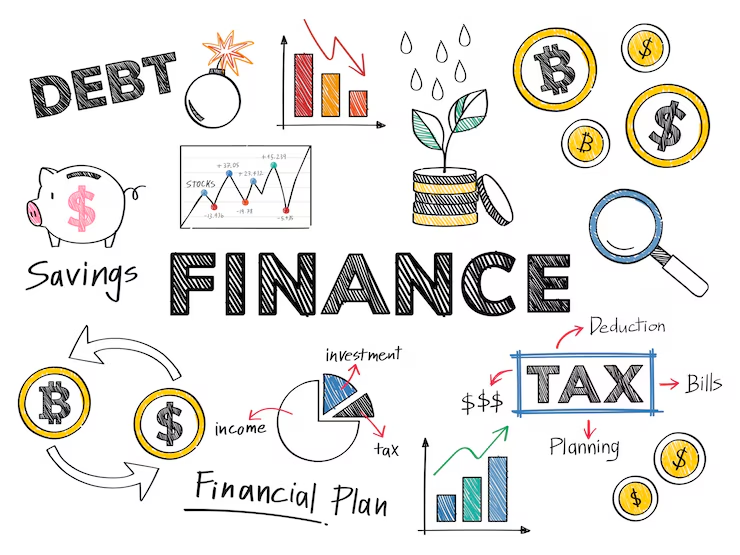
Finance is essential to any type of business, providing legitimacy to the operations, growth, and sustainability of that business whatever its size or sector. Every business, small or large, needs a robust financial framework, to allow them to confront the market challenges that all businesses face.
What Is Business Finance?
Business finance is simply the management of business money and other business financial assets. Planning, raising, controlling, and analysing funds is necessary to achieve the objectives for the organization. Business finance is composed of budgeting, forecasting, investment planning, and managing risk.
Why is business financing important?
Understanding business finance has multiple benefits. Operating Funds: Provides resources allowing business owners to manage their business on a "daily basis", such as paying bills, purchasing stock/inventory, and paying their employees wages. Decision Making: Informs owners and manager supporting decisions (opportunities/errors) about an expansion, cost savings, and/or investing (future business). Risk Management: Good business finance will identify risk ahead of time and allows owners to take steps to mitigate it. Sustainability and Growth: Adequate finance gives the business options for growth, reinvestments from profits, and ultimately allows the business to stay relevant and competitive for the future.
Types of Business Finance
There are two main categories of business finance:
1. Short-Term Finance
This is used to meet immediate financial needs and typically includes:
Working capital loans
Trade credit
Overdrafts
Invoice financing
Short-term finance is important for the short-term management of cash flow and unexpected expenses.
2. Long-Term Finance
Used for major investments and long-term growth, this includes:
Equity financing (selling shares to investors)
Long-term loans
Bonds or debentures
Retained earnings
Long-term financing is used by organizations to pay for large projects, e.g., researching and developing new products, expansion of operations, and purchasing capital equipment.
Financing a Business
Businesses can obtain finance from different sources depending on their size, needs and financial condition:
Internal Sources, which include retained earnings, owner's capital, or selling off an asset.
External Sources, which consist of the funds borrowed from banks, raised by investors, acquired via government grants and gifting or venture capital.
Budgeting and Planning
Financial planning means estimating capital needs and competing claims to that capital to also guarantee availability of capital to accomplish the company's goals. Budgeting is estimating revenues and expenses over a period of time to come up with a plan that the company commits to over that time frame.
Planning and Budgeting will help a business:
Set realistic goals
Monitor performance
Allocate resources effectively
Avoid financial crises
Key Financial Statements in Business
Business finance relies on accurate record-keeping and reporting. The main financial statements used are:
Income statement: shows total revenues, total expenses and total profit/loss over specified period of time
Balance sheet: shows point in time representation of total assets, total liabilities and total equity.
Cash Flow Statement: Displays what cash is going in and out for current business activities.
Financial statements are necessary for planning, investing, and reporting.
Issues in Business Finance
Despite its importance, businesses often face financial challenges such as:
Cash flow shortages
Over-reliance on credit
Poor budgeting
Lack of financial literacy
Economic volatility
Overcoming these challenges calls for solid financial management, sound strategic planning and sometimes counsel from financial advisers or consultants.